
Security Package: What Lenders Require to Secure a Loan
A security package is the combination of collateral, guarantees, and legal security documents a lender relies on to protect a loan if the borrower fails to repay. Its scope depends on the borrower, the assets available, the financing structure, and the lender’s requirements. For project financing, owning valuable assets does not automatically mean those assets can be pledged as loan security.
What Does a Security Package Include?
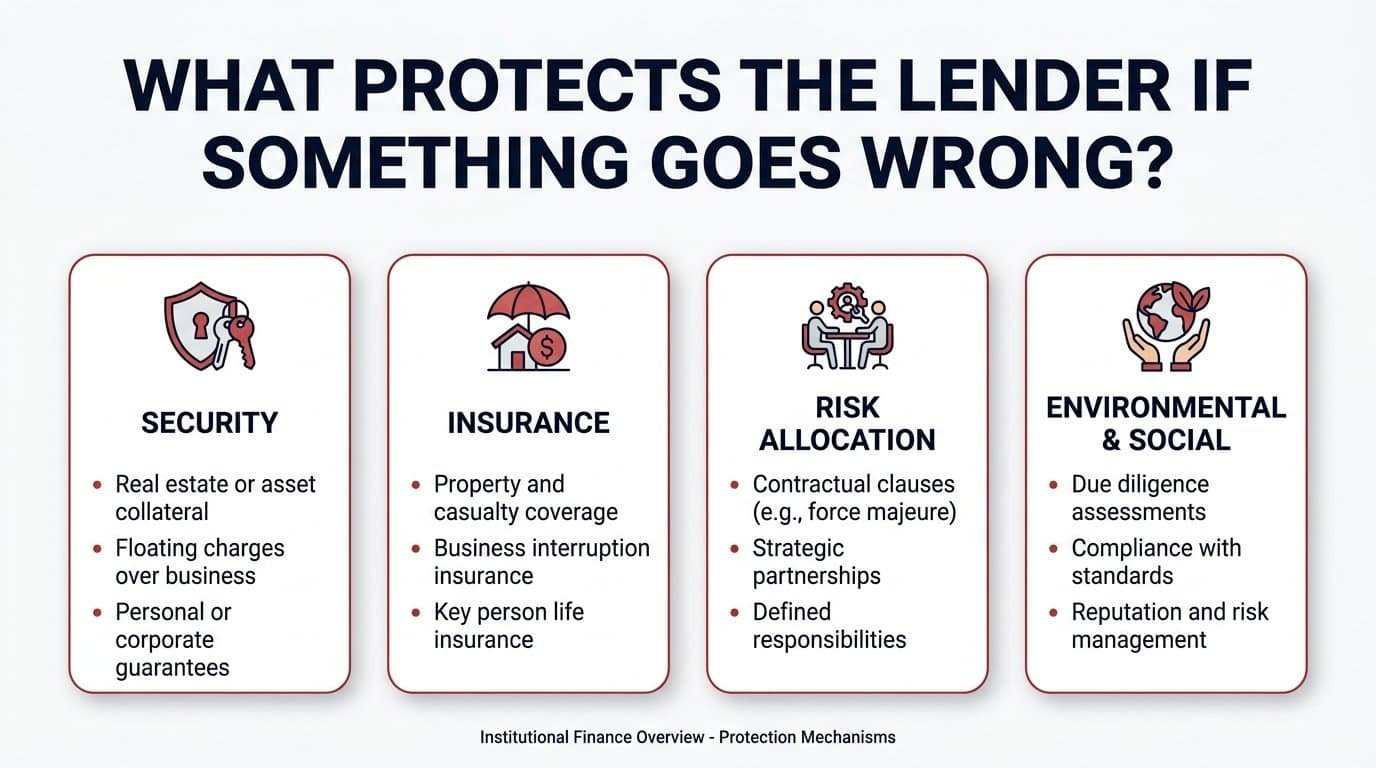
A security package establishes the lender’s legal rights over specified assets and, where applicable, additional sources of repayment. It commonly includes three elements.
1. Collateral
Collateral is an asset or property pledged to secure a loan. Depending on the transaction and applicable law, lenders may consider real estate, equipment, receivables, bank accounts, shares, or other assets with identifiable value and enforceable security rights.
Collateral for a loan must be legally available to secure the relevant obligation. An asset may be unsuitable if it is already pledged to another lender, subject to restrictions, owned by a separate entity, or difficult to value or enforce against.
The term loan collateral describes the assets supporting a borrowing arrangement. Although collateral loans can refer to different lending products, the underlying principle is that specified assets provide security for repayment.
2. Guarantees
A guarantee is a commitment by another party to meet specified obligations if the borrower fails to do so, subject to the guarantee’s terms and applicable law.
Depending on the transaction, a lender may consider a corporate guarantee from a parent company, a sponsor guarantee, or another form of credit support. The value of a guarantee depends on the guarantor’s financial capacity, the scope of its obligations, and whether the commitment is legally enforceable.
A guarantee and collateral serve different purposes: a guarantee creates an obligation for the guarantor, while collateral gives the lender rights over specified assets.
3. Supporting Security Documentation
Security documentation establishes the lender’s rights and the conditions under which those rights can be exercised. Depending on the transaction and jurisdiction, this may include security agreements, mortgages, pledges, assignments, guarantees, and relevant registrations or filings.
Lenders review whether the documents identify the relevant parties and assets, establish the intended security rights, and satisfy applicable legal requirements. Existing security interests, consent requirements, ownership issues, and restrictions can affect whether the proposed security is effective.
Why Project Assets Are Not Automatically Available as Loan Security
A project may have substantial assets without those assets being available to secure a particular loan. Legal ownership, existing liens, contractual restrictions, third-party rights, and the identity of the asset-owning entity can all affect their availability.
For example, a project company may own equipment but have previously granted a lender security over that equipment. A new lender cannot assume that the same assets are available for additional security without examining the existing arrangements, priority position, and applicable legal restrictions.
Lenders therefore assess more than asset value. They need to establish whether the proposed security can be granted, whether competing claims exist, and whether the relevant rights can be enforced if the borrower defaults.
What Lenders Review in a Security Package
Lenders examine whether the proposed collateral, guarantees, and supporting documents provide legally effective protection consistent with the financing arrangement. Their review may consider asset ownership and valuation, existing security interests, the parties providing security, enforceability, priority, and any required consents or registrations.
The requirements vary by transaction, lender, asset type, and jurisdiction. A security package that is acceptable for one financing arrangement may not be sufficient for another.
For project sponsors, the key issue is whether the assets and credit support being presented are actually available to secure the proposed borrowing and whether the supporting legal arrangements can establish the lender’s intended rights.
Preparing for Lender Review
Understanding the security package is one part of preparing a project for financing. Sponsors also need to understand how collateral, repayment capacity, legal enforceability, and the wider financing requirements fit together in a lender’s assessment.
For a structured approach to preparing a project for lender review, see AltFin’s Capital Readiness System (CRS).
