
How to Produce a Feasibility Study That Lenders Will Not Ignore
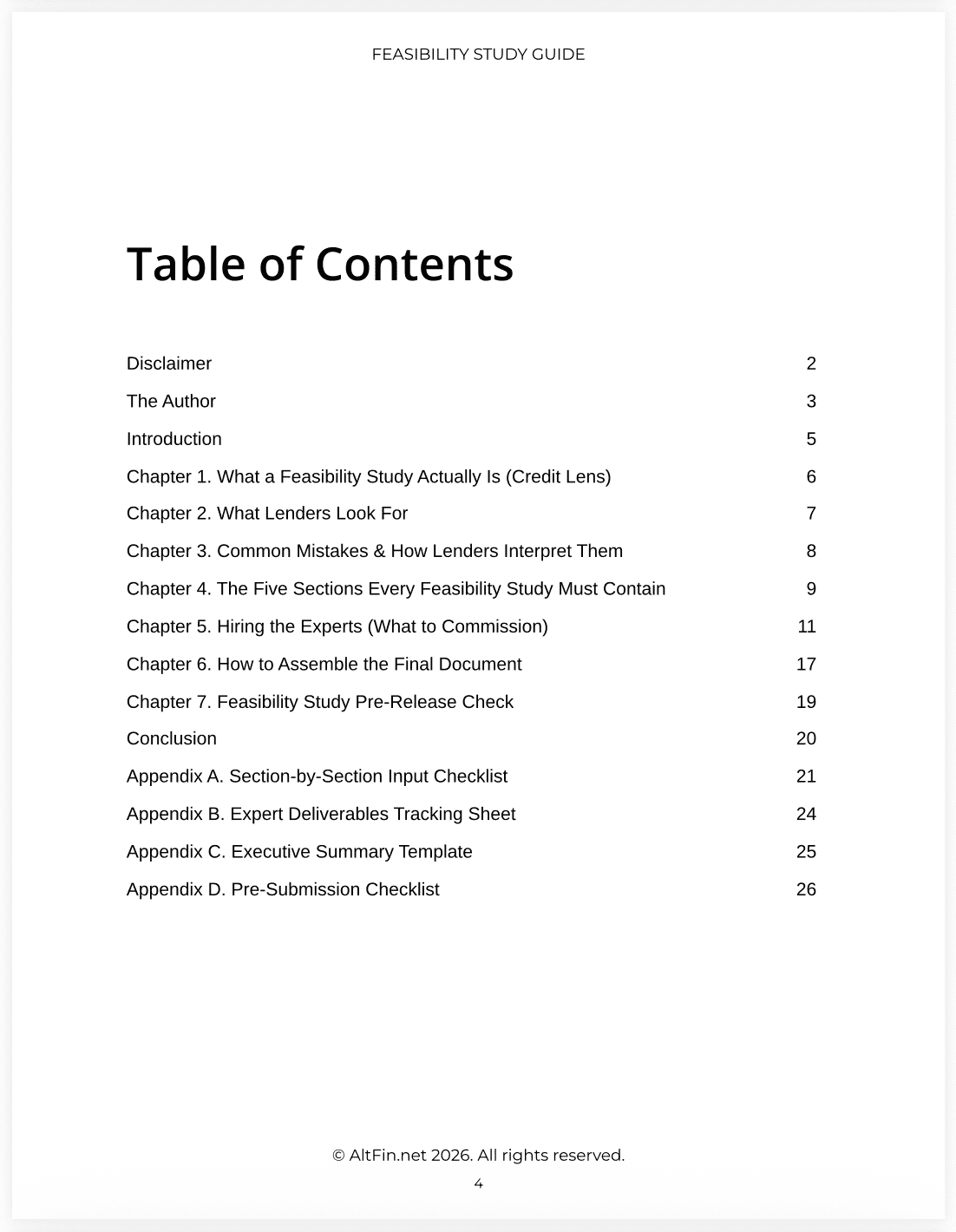
The AltFin Feasibility Study Blueprint is a practical guide that shows you how to structure, commission, and assemble a project feasibility study in the format lenders actually expect to review. The bankable feasibility study format follows the five-section structure credit teams already use. It provides a standardized, lender-agnostic framework designed to ensure your study is coherent, defensible, and ready for serious capital review, not a fragmented collection of expensive reports.
What You Get
The Five-Section Model:
A detailed breakdown of the Market, Technical, Financial, Legal, and ESG sections, including objectives, required inputs, pass conditions, and common red flags.
The Correct Build Sequence:
Learn the dependency rules that prevent you from building a financial model before revenue logic exists or commissioning lawyers before a structure is set.
Expert Commissioning & Review Framework:
A practical guide showing which experts to hire, when to hire them, and how to review their deliverables before progressing to the next stage.
Four Ready-to-Use Checklists:
Feasibility Study Section-by-Section Input Checklist to track document and analysis completion.
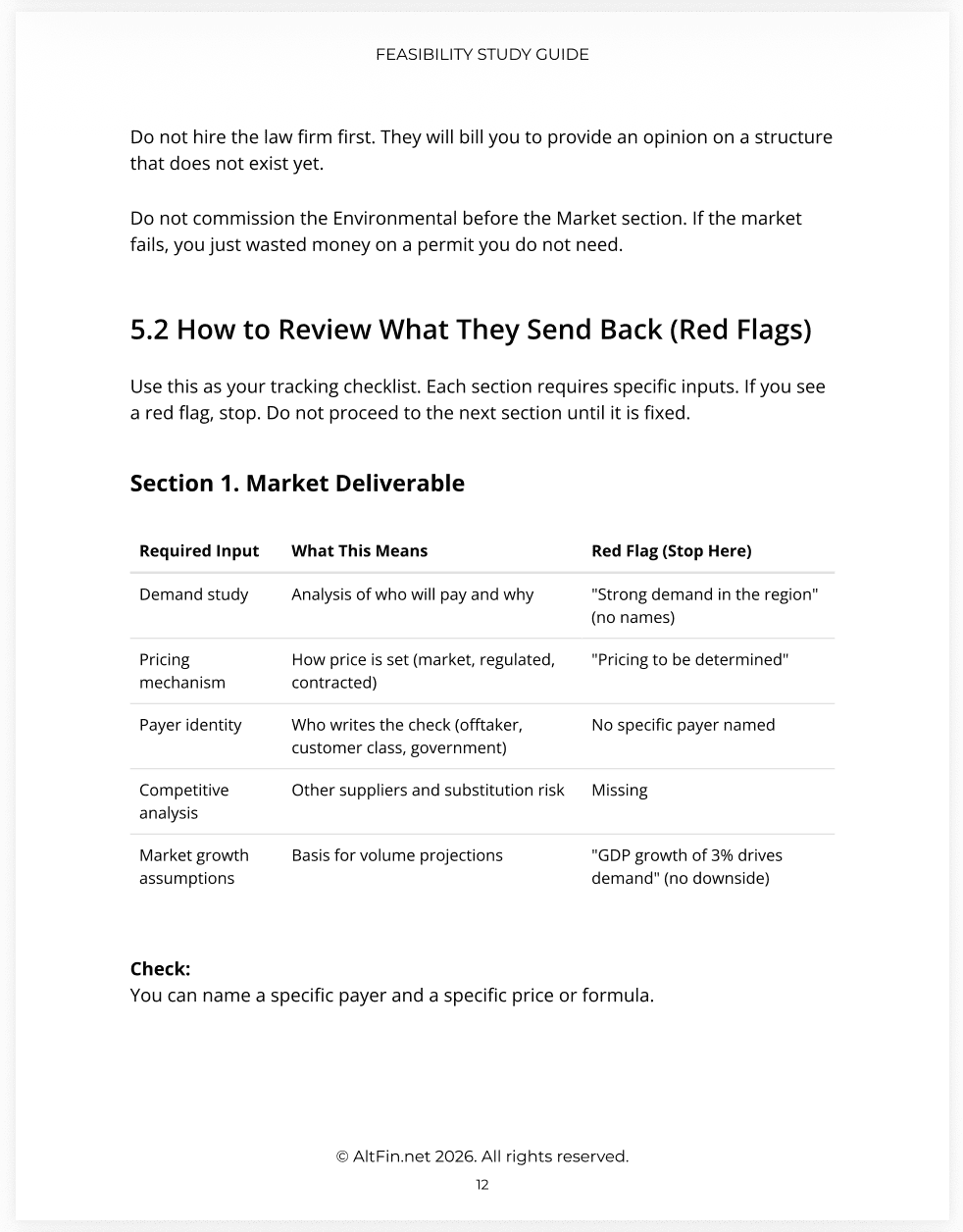
Expert Deliverables Tracking Sheet to monitor consultant progress and red flags.
Feasibility Study Executive Summary Template to answer the five questions lenders need immediately.
Feasibility Study Pre-Submission Checklist for final quality control before approaching a lender.
Together, these function as a practical feasibility study template you can apply across project types.
How It Works
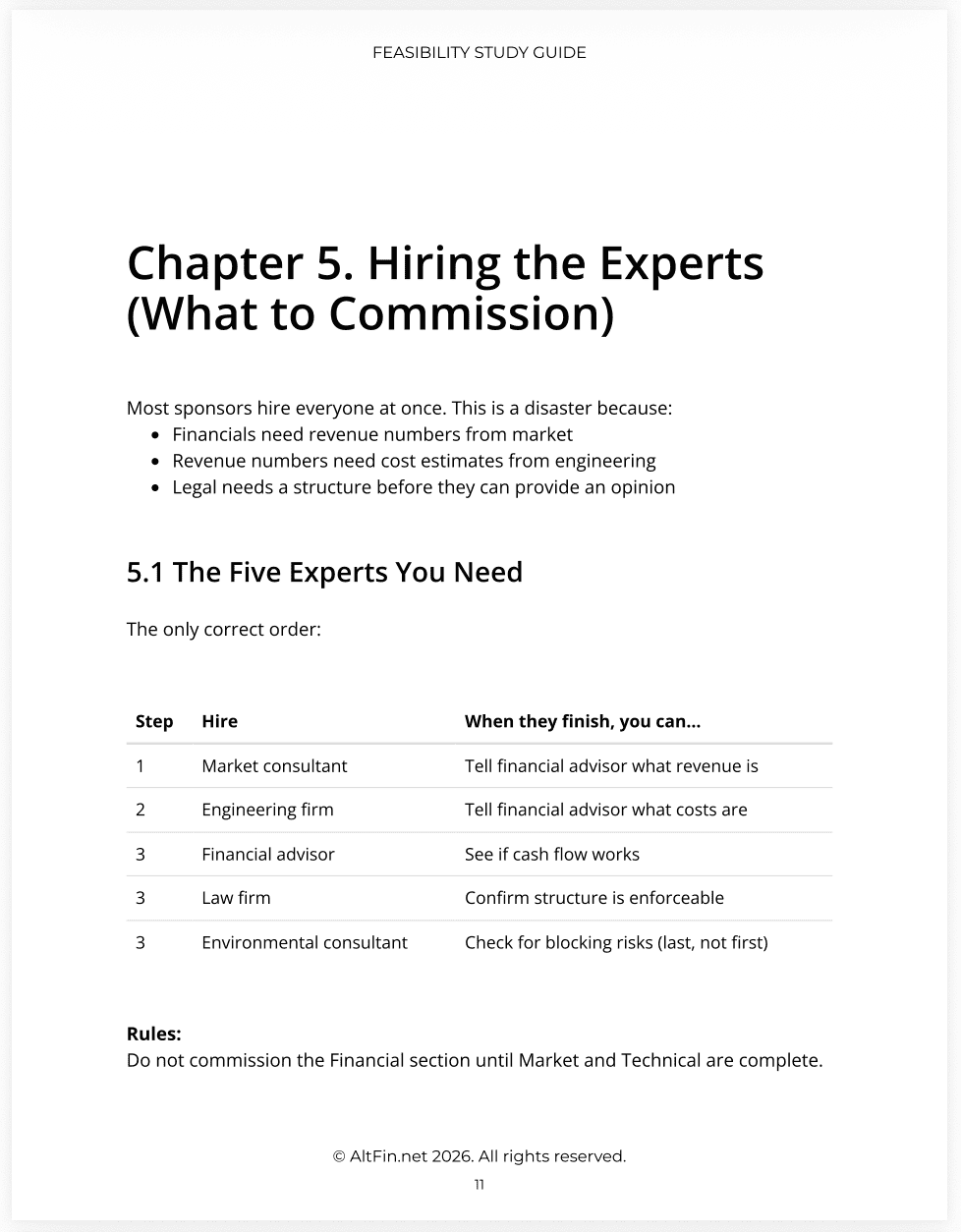
This blueprint mirrors the way credit teams evaluate projects. It walks you through how to do a feasibility study in the specific, logical sequence lenders expect:
- Market First: Anchor your revenue logic by identifying who pays, how much, and why before anything else.
- Technical Second: Define the cost estimates and design basis that depend on the market case.
- Financial Third: Build a cash flow model using the revenue and cost data from the first two sections.
- Legal & Regulatory Fourth: Confirm the structure and permits are enforceable.
- ESG Last: Perform a final check for any blocking environmental or social risks.
Following this sequence ensures a complete, defensible feasibility study is the first thing a lender sees.
What This Guide Helps You Avoid
Spending money on the wrong consultants too early
Reduce revision cycles
Building financial models before revenue logic exists
Producing lender-facing documents with unsupported assumptions
Structuring feasibility studies in ways that quietly damage credibility
Looking unprepared in front of lenders
Wasting months advancing projects that are structurally incomplete
Who This Is For
This guide is designed for developers and sponsors preparing projects seeking $10M+ in financing. It is particularly relevant for sectors including:
- Infrastructure
- Renewable Energy
- Real Estate & Hospitality
- Oil & Gas
Why This Matters
This methodology is built on AltFin’s experience screening over $1.45 trillion in global project deal flow. The framework applies the same structural discipline used by credit teams.
Lenders don’t fund potential; they fund structure. This guide helps you deliver a study that proves your project is structurally financeable.
Frequently Asked Questions
Every lender has different requirements. Will this still help?
Yes. While requirements vary, the underlying categories of information (Market, Technical, Financial, Legal, ESG) are consistent across lender review. This guide focuses on the structural foundations that apply before lender-specific requests begin.
We already have all the reports.
Reports alone don’t make a study. Having the reports and presenting a coherent, decision-grade study are two different things. This guide shows you how to conduct a feasibility study that unifies them into one defensible document — structured to prove financeability, not just feasibility, and assembled into a feasibility study example-quality submission lenders can actually evaluate.
Does it include financial modelling?
No. The guide focuses on structure, sequencing, documentation, completeness, and lender reviewability.
Can’t our consultants handle this?
Yes, but usually later and at a significantly higher cost. Consultants produce inputs; you need a feasibility study template and sequence to assemble them correctly. This guide helps you establish the correct sequence and internal discipline before you commission work prematurely or approach capital.
Will this guarantee funding?
No. No guide can guarantee financing. This blueprint is designed to materially improve the likelihood of your project receiving a serious review by preventing common, costly structural mistakes.
My project is unique. Will this still apply?
Every project is different. The structure of lender review is not. Lenders still require complete information, defensible assumptions, and a coherent package.
Build a Complete Feasibility Study Lenders Will Not Ignore
One-Time Investment: $97
