
Capital Stack
A capital stack is the combination of debt and equity used to finance a project, including the repayment priority and risk attached to each funding source. Lenders assess a sponsor’s proposed capital stack to determine whether the financing structure supports debt repayment, provides adequate security, and meets their underwriting requirements.
What Does Capital Stack Mean?
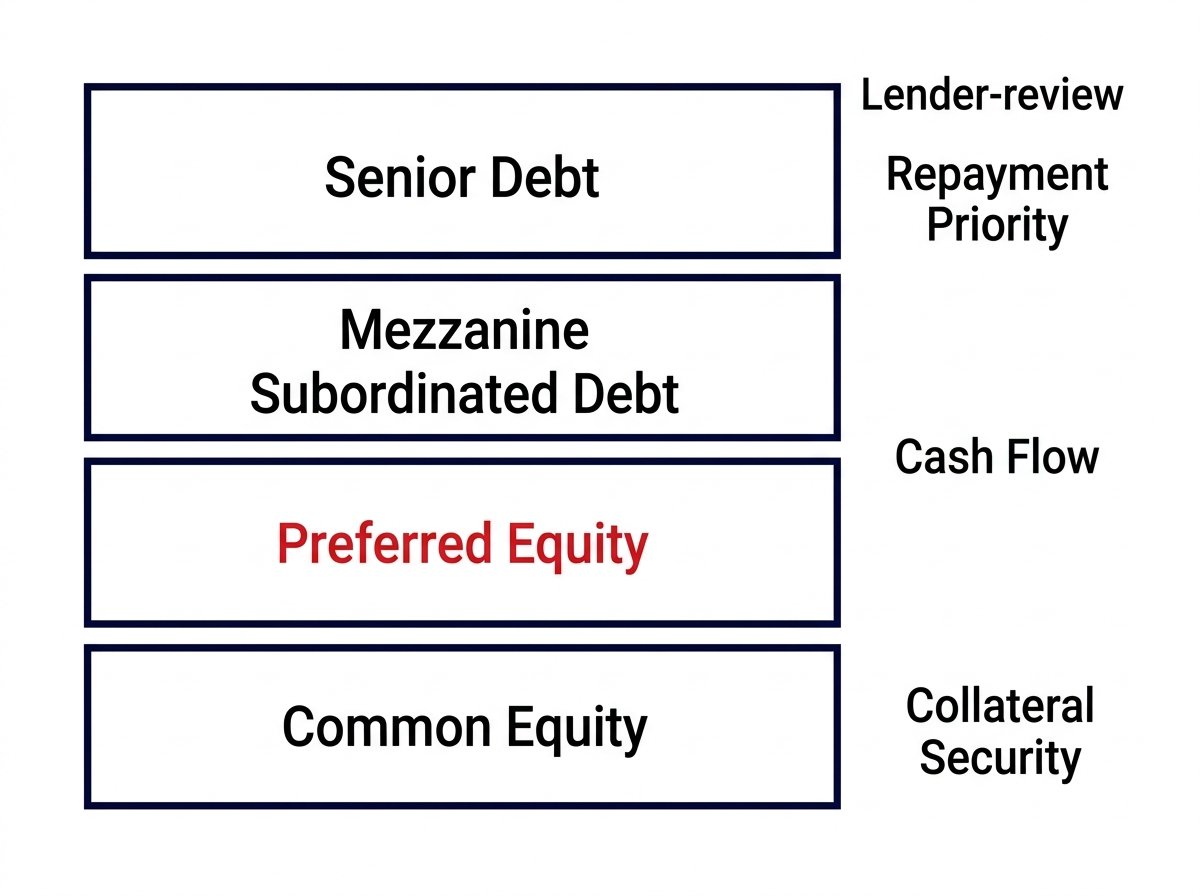
The capital stack describes the sources of funding used to finance a project and the order in which different financing parties rank for repayment or returns. Capital stack funding may combine several forms of debt and equity, depending on the project’s economics, risk profile, and financing requirements.
A typical capital stack may include:
- Senior debt: Generally ranks ahead of other debt and equity for repayment and may be secured against project assets.
- Mezzanine or subordinated debt: Ranks behind senior debt and typically carries greater risk.
- Preferred equity: May have priority over common equity for distributions, subject to agreed terms.
- Common equity: Bears residual financial risk and receives returns after higher-ranking claims are satisfied.
Not every project requires every layer. Capital stacking—the combination and arrangement of different funding sources—depends on the project’s cash flow, available collateral, sponsor equity, and the requirements of prospective financing parties.
How Sponsors Present a Capital Stack to Lenders
A proposed capital stack needs to show more than the total amount of debt and equity required. Lenders need to understand the relationship between the funding sources, their repayment priorities, and the risks attached to the proposed financing structure.
In particular, lenders assess:
- Funding composition: How much financing comes from debt and equity, and whether the proposed mix is appropriate for the project.
- Repayment capacity: Whether projected cash flow can support the proposed debt obligations under realistic operating and downside scenarios.
- Existing obligations: Whether other lenders, investors, or contractual commitments affect cash flow or repayment priority.
- Collateral and security: What assets, rights, or other collateral support the debt, and how the security arrangements interact.
- Financing terms: Whether maturity, repayment schedules, subordination, and other material terms are compatible across the capital stack.
These considerations help lenders determine whether the proposed structure is consistent with their underwriting requirements. A capital stack does not, by itself, establish that a project is financeable.
Capital Stack Across Project Financing Types
Capital stack considerations apply across structured finance, private credit, secured lending, and asset-based lending, as well as real estate finance, acquisition and development finance, and infrastructure finance. The appropriate structure varies according to the asset, cash flow, collateral, jurisdiction, and financing mandate.
For example, an infrastructure project with long-term contracted revenues may support a different debt structure from a real estate development dependent on construction completion and property sales. In both cases, lenders need to understand how the proposed capital stack supports repayment and allocates risk.
Preparing a Capital Stack for Lender Review
Sponsors preparing for financing need to ensure that their proposed capital stack is consistent with project economics, repayment capacity, collateral arrangements, and the rights of existing and prospective financing parties. These elements must also align with the project’s financial model and broader financing structure.
The AltFin Capital Readiness System provides a structured implementation framework for sponsors preparing projects for financing and lender review.
