
Collateral Finance
Collateral finance is lending in which a borrower pledges assets as security for a loan. Loan collateral helps protect the lender if the borrower defaults, but its value alone does not determine whether financing will be approved. Lenders assess the asset’s value, liquidity, ownership, existing claims, and legal enforceability alongside the borrower’s repayment capacity and the project’s risks.
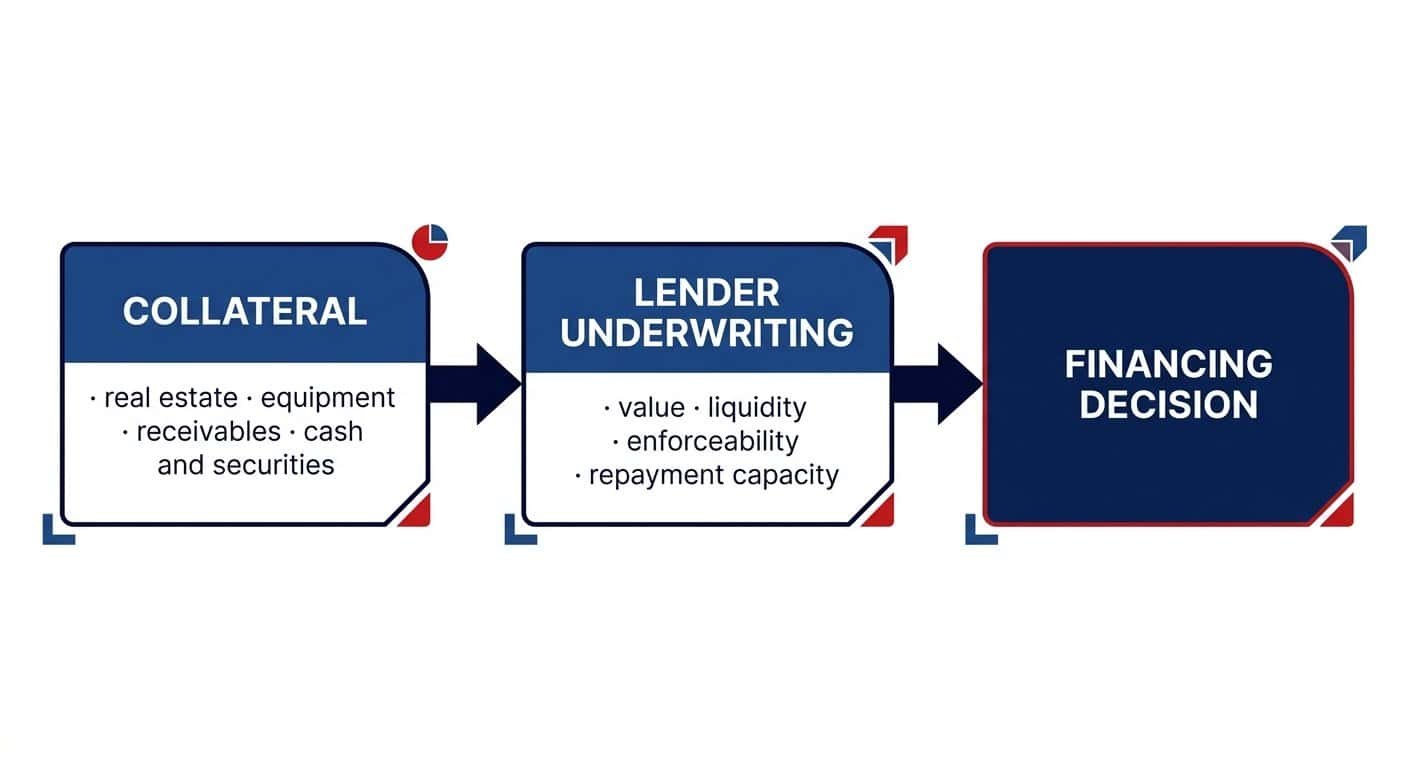
What Collateral Can Be Used for a Loan?
The assets accepted as collateral depend on the lender, the loan purpose, the borrower’s credit profile, and the proposed financing structure. Common forms of security include:
- Real estate: Land, commercial property, and other eligible property assets used in real estate finance or acquisition and development finance.
- Equipment and machinery: Physical assets that may support secured lending for industrial, infrastructure, and other capital-intensive projects.
- Receivables and contracts: Eligible payment obligations or contractual cash flows that may support asset-based lending (ABL), subject to their quality and enforceability.
- Financial collateral: Cash, cash deposits, and eligible securities pledged to secure an obligation. Their acceptability depends on the transaction, applicable legal requirements, and the lender’s policies.
- Project and company assets: Depending on the transaction, lenders may consider shares, bank accounts, insurance proceeds, contractual rights, and other assets that can legally secure the debt.
Not every asset qualifies as acceptable collateral for a loan. Restrictions on ownership, existing liens, valuation uncertainty, limited liquidity, and legal or jurisdictional constraints can reduce an asset’s suitability as collateral.
How Do Lenders Assess Collateral Value?
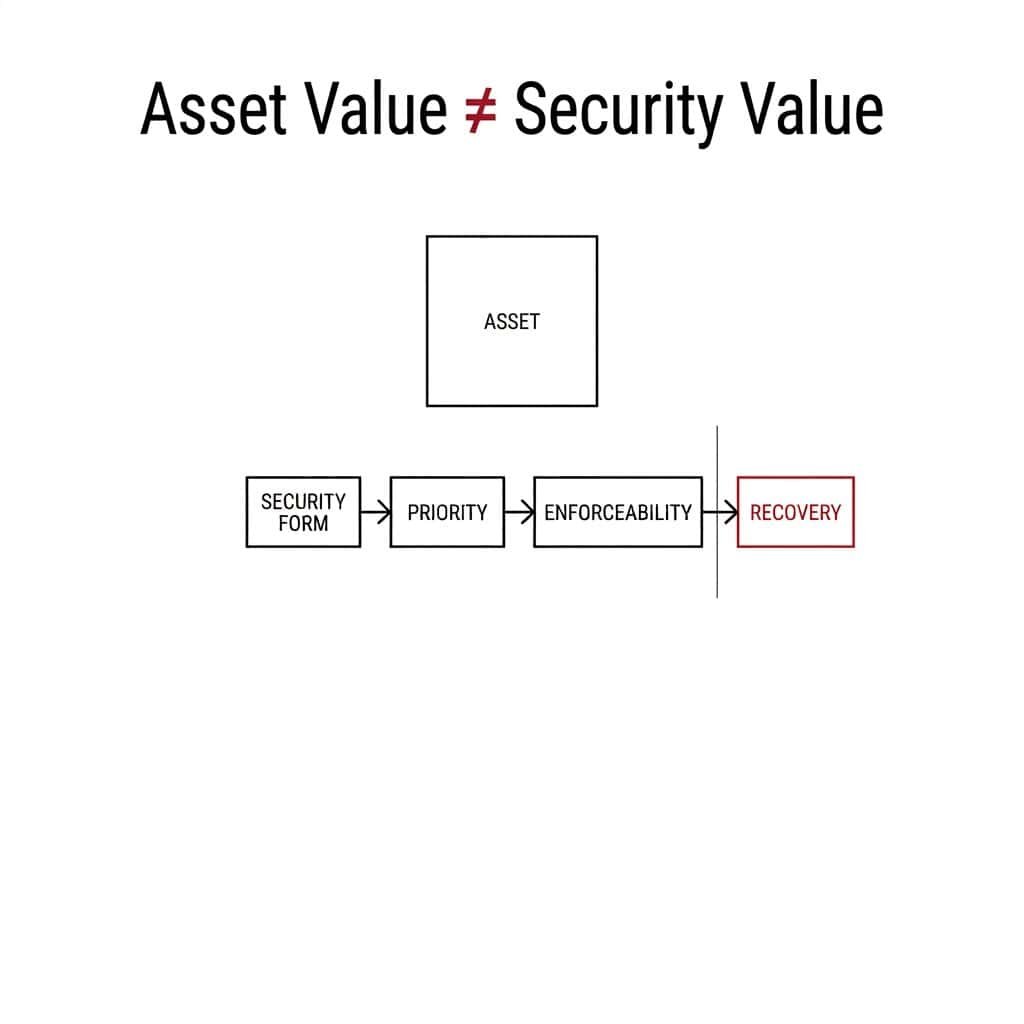
Collateral valuation helps lenders determine what an asset may be worth and how much protection it could provide if the borrower defaults. The collateral value is not necessarily equal to the amount a lender will advance against it.
Lenders may consider the asset’s market value, liquidity, condition, valuation reliability, existing claims, and the costs and practicalities of enforcing security. The resulting lending value depends on the asset type, the lender’s underwriting criteria, and the proposed financing structure.
For project sponsors, this distinction matters: owning valuable assets does not automatically mean those assets provide sufficient security for the required financing.
Why Project Assets May Not Be Enough
In infrastructure finance, real estate development, and other project-finance transactions, the existence of valuable physical assets does not automatically make a project financeable.
Lenders also consider whether the project can generate sufficient cash flow to service debt, whether the assets can be accessed or enforced against if the borrower defaults, and whether the proposed security provides adequate protection. Construction risk, incomplete permits, contractual limitations, competing claims, and uncertain asset values can all affect the lender’s assessment.
Depending on the transaction, lenders may require additional corporate guarantees, sponsor support, assignments of contractual rights, or other forms of credit support. These requirements depend on the transaction, lender policy, and applicable legal framework.
How Collateral Fits Into the Financing Structure
Collateral is one component of a broader financing structure. In structured finance and private credit, lenders evaluate security alongside repayment sources, leverage, seniority, cash-flow allocation, and each lender’s position within the capital stack.
Asset-based lending may rely heavily on eligible assets and borrowing-base considerations, while project finance may place greater emphasis on project cash flows, contractual rights, and security over relevant project assets. Acquisition and development finance may combine property security with additional guarantees or other credit support.
The objective is to establish whether the proposed security and repayment arrangements satisfy the lender’s underwriting requirements — not simply whether the project owns assets.
Preparing a Project for Lender Review
Before approaching lenders, project sponsors should understand how their assets, repayment capacity, existing liabilities, and proposed financing structure fit together. Gaps between available security and lender requirements can affect the amount, terms, and feasibility of the proposed financing.
AltFin’s Capital Readiness System (CRS) provides a structured framework for preparing a project for financing review. It is relevant to sponsors who need to assess how collateral, capital structure, financing requirements, and due diligence relate to the project’s overall financing readiness.
