
Due Diligence Checklist
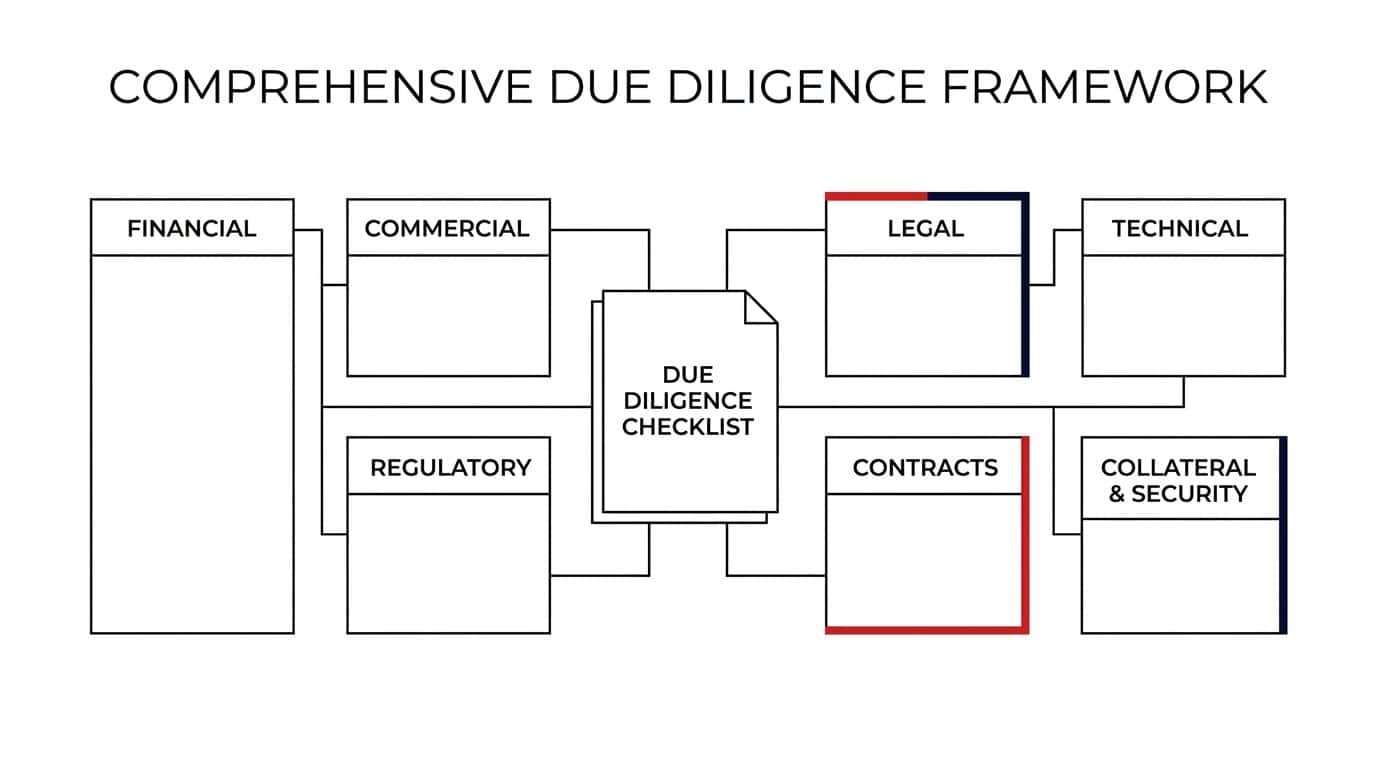
A due diligence checklist identifies whether a project has the information, approvals, contracts, financial evidence, collateral, and risk controls that lenders or other capital providers need to evaluate a financing request. For project finance, structured finance, secured lending, asset-based lending, real estate finance, and infrastructure finance, the review generally focuses on the project’s commercial, financial, legal, technical, regulatory, and security position.
What Should a Due Diligence Checklist Cover?
The exact scope varies by transaction, but a financing-focused due diligence review normally covers these areas:
1. Financial and Commercial Information
The review should establish whether the project’s financial case is supported by credible evidence.
Key areas include:
- Revenue assumptions and sources of repayment
- Operating costs and capital expenditure
- Existing debt and other financial obligations
- Financial projections and supporting assumptions
- Customer, offtake, lease, or other revenue arrangements
- Market demand and competitive conditions
- Key financial risks and downside considerations
The objective is to determine whether the projected cash flows and underlying commercial assumptions provide a reasonable basis for financing analysis.
2. Contracts and Commercial Commitments
Contracts are important because they establish the project’s actual commercial relationships and obligations.
Due diligence may cover:
- Offtake, sales, lease, supply, or operating agreements
- EPC and construction contracts
- Operations and maintenance agreements
- Key supplier and customer contracts
- Contract terms affecting revenue, costs, termination, or default
- Counterparty obligations and credit considerations
For lenders, the question is not simply whether contracts exist, but whether they provide sufficiently reliable and enforceable support for the project’s financial structure.
3. Permits, Regulatory and Legal Matters
The project should have the approvals and legal foundations required to develop and operate as proposed.
This can include:
- Development and operating permits
- Environmental and regulatory approvals
- Land or property rights
- Corporate ownership and authority
- Material litigation or disputes
- Compliance obligations
- Conditions that could restrict development, operation, or financing
Missing or uncertain approvals can materially affect the project’s financing case.
4. Technical and Project Risk
Technical due diligence examines whether the physical project can reasonably be developed and operated as described.
Relevant areas may include:
- Project design and specifications
- Construction arrangements
- Development schedule
- Technology and equipment
- Site conditions
- Construction and operating risks
- Independent technical assessments where applicable
For infrastructure finance and project finance, technical risks can directly affect completion, operating performance, and cash flow.
5. Collateral and Security Package
For secured lending, asset-based lending, real estate finance, and other collateral-supported transactions, the review also considers the assets available to support the financing.
This may include:
- Ownership of relevant assets
- Asset value and condition
- Existing liens or encumbrances
- Real estate or other property rights
- Receivables, accounts, or other financing assets
- Guarantees or other credit support
- The proposed security package
The central question is whether the collateral and related security rights are identifiable, enforceable, and consistent with the proposed financing structure.
What Are Lenders Trying to Establish?
A financing due diligence review ultimately helps determine whether the project can be understood, verified, and assessed on its underlying evidence.
The key questions are generally:
- Does the project exist as described?
- Are the project’s revenues and costs supported by evidence?
- Are the required contracts, permits, and rights in place?
- Are material legal, technical, commercial, and financial risks identifiable?
- Is the proposed collateral and security position sufficiently clear?
- Does the available information support assessment of the proposed financing structure?
This is closely related to bankability: whether the project has the characteristics and supporting evidence that allow a lender or other capital provider to undertake a meaningful credit and risk assessment. It does not, by itself, mean that financing will be approved.
From Due Diligence to Financing Readiness
A checklist can identify what needs to be reviewed, but project sponsors often also need a structured way to determine whether the available information is sufficient for a financing review.
For readers who want a structured implementation framework for assessing financing readiness, the AltFin Project Financing Scorecard provides the relevant next step.
