
Due Diligence Documents
Due diligence documents for financing typically include financial, technical, legal, commercial, corporate, and collateral or security documentation. Lenders use these documents to assess the project’s bankability, risks, cash flow, ownership, contractual position, collateral, and ability to support the proposed financing.
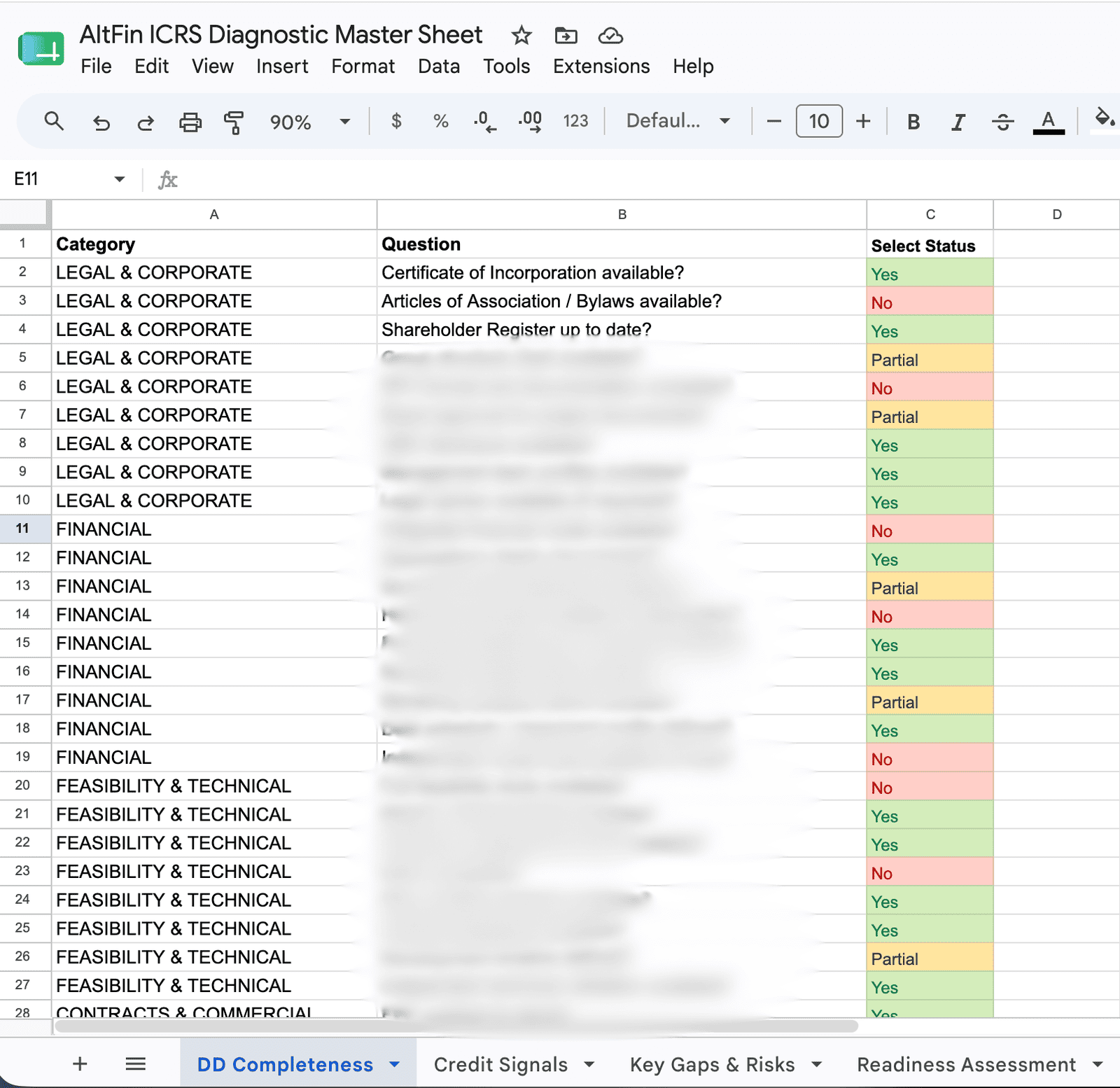
What documents are required for lender due diligence?
A financing due diligence package commonly includes:
1. Financial documentation
Financial information allows the lender to assess projected cash flow, debt service capacity, assumptions, and downside performance. Depending on the transaction, this can include:
- Historical financial statements
- Financial model and projections
- Revenue and operating assumptions
- Sources and uses of funds
- Existing debt and financing obligations
- Cash-flow and debt-service information
- Sensitivity or downside analysis
- Evidence supporting key financial assumptions
2. Technical and project documentation
For infrastructure, real estate, development, energy, and other asset-based transactions, lenders may require documentation demonstrating that the underlying project or asset is technically viable. This can include:
- Feasibility studies
- Technical reports
- Engineering documentation
- Development plans and schedules
- Construction or operating information
- Permits and approvals
- Independent technical reports, where applicable
3. Legal and corporate documentation
The lender needs to establish who owns and controls the project and whether the proposed financing can be legally documented and enforced. Typical documents include:
- Corporate formation and ownership documents
- Organizational and shareholder information
- Material contracts
- Existing financing agreements
- Legal opinions or reports, where required
- Licenses, permits, and regulatory approvals
- Litigation and material legal disclosures
The project company and its ownership structure are particularly relevant where financing is being provided to a special-purpose vehicle.
4. Commercial documentation
Lenders need evidence that the project or asset has a credible commercial basis. Depending on the transaction, this may include:
- Offtake or sales agreements
- Customer or purchaser contracts
- Supply agreements
- Operating agreements
- Concession or lease agreements
- Key commercial counterparties
- Market and demand information
The exact requirements vary significantly by sector and financing structure.
5. Collateral and security documentation
Where the financing is secured, lenders need to understand the proposed security package and collateral/security structure. Documentation may include information concerning:
- Real estate or other pledged assets
- Security interests
- Guarantees
- Pledges or charges over shares or project assets
- Assignment of material contracts or receivables
- Insurance
- Existing liens or encumbrances
- Intercreditor or priority arrangements, where applicable
The precise security package depends on the lender, jurisdiction, asset base, capital stack, and financing structure.
How these documents support bankability
Due diligence is not simply a document-collection exercise. The lender uses the documentation to determine whether the transaction is sufficiently bankable and whether the proposed financing structure is supported by reliable evidence.
The same principles can apply across project finance, structured finance, private credit, secured lending, asset-based lending, infrastructure finance, real estate finance, and acquisition or development finance. The documents change according to the transaction, but the lender is generally testing the same fundamental issues: cash flow, risks, contractual support, ownership, collateral, enforceability, and repayment capacity.
For a financing application or loan application, missing, inconsistent, or unsupported documentation can therefore become a lender concern even when the underlying project has commercial merit.
Preparing for lender due diligence
The objective is to ensure that the documentation required to support the proposed financing, underwriting, and lender requirements is available, consistent, and supportable, not not to provide every document that exists.
For sponsors and project owners who want a structured framework for assessing these requirements before approaching lenders, the AltFin Project Financing Scorecard provides a practical starting point.
