
What Is Project Finance? How Lenders Evaluate Projects
Project finance is a specialized financing structure used for large-scale infrastructure, energy, industrial, and real asset projects.
Unlike traditional corporate lending, project finance relies primarily on the project’s future cash flows, contractual structure, collateral package, and risk allocation framework — not the sponsor’s balance sheet alone.
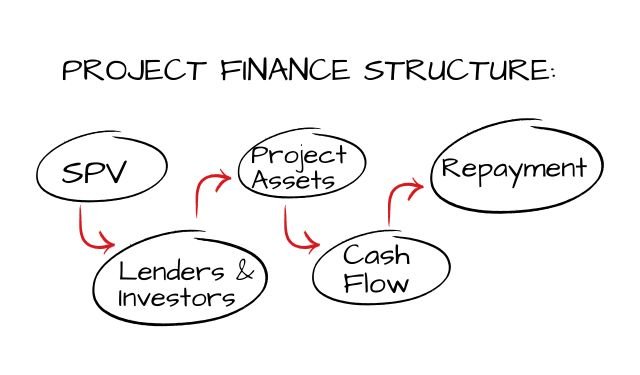
In most cases, financing is structured through a Special Purpose Vehicle (SPV), with lenders evaluating whether the project can independently support debt repayment under underwriting standards.
For sponsors pursuing $10M – $100M+ projects, project finance is not simply “raising capital.” It is a lender-driven screening and structuring process designed to determine whether a project is bankable.
The Reality Most Sponsors Discover Too Late
Most projects do not fail because the idea is weak.
They fail because they are not ready for lender review.
In practice, lenders reject projects long before formal due diligence or credit committee review due to:
- Incomplete due diligence documentation
- Weak repayment structure
- Unsupported financial assumptions
- Poorly structured capital stacks
- Unclear collateral security
- Inadequate risk allocation
- Missing feasibility evidence
- Weak legal enforceability
- Unstructured data rooms
- Non-bankable sponsor submissions
Lenders are not evaluating vision alone. They are evaluating execution certainty, recoverability, enforceability, and downside protection.
How Project Finance Actually Works
A typical project finance structure includes:
| Component | Lender Purpose |
| Special Purpose Vehicle (SPV) | Isolates project liabilities and cash flows |
| Equity Capital | Sponsor risk participation |
| Senior Debt | Primary financing |
| Collateral Package | Security for lenders |
| Revenue Contracts | Supports debt repayment predictability |
| Risk Allocation Framework | Transfers risks to controllable parties |
| Due Diligence Package | Enables underwriting review |
Lenders assess whether the project can generate stable, enforceable, and predictable cash flow sufficient to repay debt over time.
What Lenders Evaluate Before Due Diligence
Before a lender commits substantial underwriting resources, the project is screened for capital readiness.
This initial screening often determines whether the project progresses at all.
Key lender review areas include:
1. Documentation Completeness
Lenders expect a structured submission package, including:
- Financial model
- Feasibility study
- Legal structure
- Permits and approvals
- EPC and operational agreements
- Revenue/offtake contracts
- ESG positioning
- Sponsor information
- Risk analysis
- Capital stack structure
2. Bankability Signals
Lenders assess:
- Revenue predictability
- Contract quality
- Sponsor credibility
- Counterparty strength
- Repayment visibility
- Security enforceability
- Execution capability
3. Capital Structure
Weak or unrealistic capital stacks are a common rejection factor.
Lenders review:
- Equity contribution
- Debt sizing
- Mezzanine exposure
- Repayment coverage
- Contingency structure
- Reserve mechanisms
4. Risk Allocation
Projects must allocate risks to the parties best able to manage them.
Typical lender concerns include:
- Construction risk
- Operational risk
- Demand risk
- Political/regulatory risk
- Cost overrun exposure
- Contractor performance
Why Many Projects Fail Lender Screening
Common lender rejection triggers include:
- “Concept-stage” projects presented as finance-ready
- Incomplete or inconsistent financial models
- No structured virtual data room
- Unsupported revenue assumptions
- Lack of collateral clarity
- Weak sponsor preparation
- Missing feasibility evidence
- Unrealistic timelines or cost assumptions
- No submission structure
Most sponsors underestimate how documentation-driven finance actually is.
What Makes a Project Bankable?
Lenders typically look for:
- Clear repayment visibility
- Verifiable project economics
- Structured risk mitigation
- Complete due diligence documentation
- Legally enforceable contracts
- Professional lender presentation
- Credible execution capability
- Institutional-grade submission standards
Bankability is not a marketing concept. It is an underwriting determination.
Final Thoughts
Project finance is fundamentally a risk evaluation system.
The question is not simply whether a project can generate returns.
The question lenders ask is:
“Is this project sufficiently structured, documented, enforceable, and de-risked to survive underwriting?”
Most projects fail before formal review because they are not lender prepared.
Capital readiness is what determines whether a project advances toward capital — or is rejected before the process begins.
Get Financing Insights to Your Inbox
Why lenders go silent, stall, or pass — and how to fix it, before or during lender review.
