
How Messy Data Rooms Kill Financing Deals
Messy data rooms can derail financing by making a project difficult to understand, verify, and diligence. Missing documents, conflicting information, outdated files, and poor organization create additional questions, increase review time, and can reduce lender confidence in the accuracy and reliability of the submission.
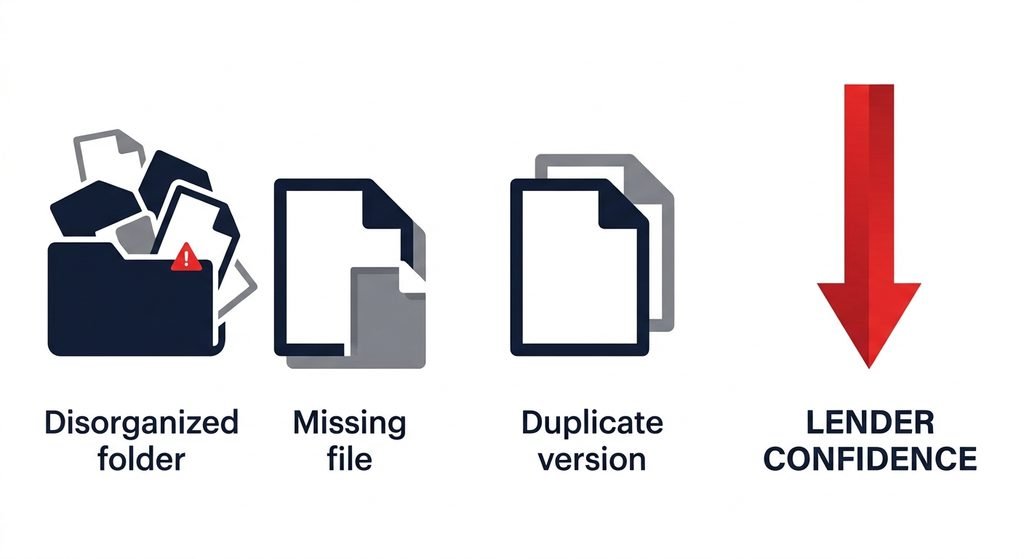
A messy data room creates a more serious problem: it makes the project harder to understand, verify, and diligence.
Institutional financing involves extensive review of the project’s commercial, technical, financial, legal, regulatory, and risk information. Lenders and their advisers need to establish what the project is, how it generates cash flow, what supports repayment, what risks exist, and whether the relevant claims and assumptions can be verified. World Bank guidance on project finance describes detailed legal, permitting, consent, technical, and financial due diligence as part of lender evaluation, while IFC has specifically noted that standardized due-diligence materials can facilitate lender processing and decision-making.
A data room therefore becomes part of the review process itself. When information is incomplete, contradictory, poorly organized, difficult to locate, or impossible to trace back to supporting evidence, the lender may have to spend additional time determining what is actually true. That can create repeated questions, additional document requests, delays, and reduced confidence in the submission. In some cases, the project may simply become too difficult or inefficient to progress through the lender’s process.
Why Does a Data Room Become Messy?
Most messy data rooms usually develop as a project evolves.
Documents arrive from lawyers, engineers, consultants, contractors, shareholders, advisers, government authorities, customers, suppliers, and other counterparties. Different people upload files at different times. Revised agreements replace earlier versions. Financial models change. Permits are amended. Technical reports are updated. New contracts are signed.
Without deliberate document control, the data room gradually becomes a collection of project history rather than a controlled representation of the project as it currently stands.
Typical problems include:
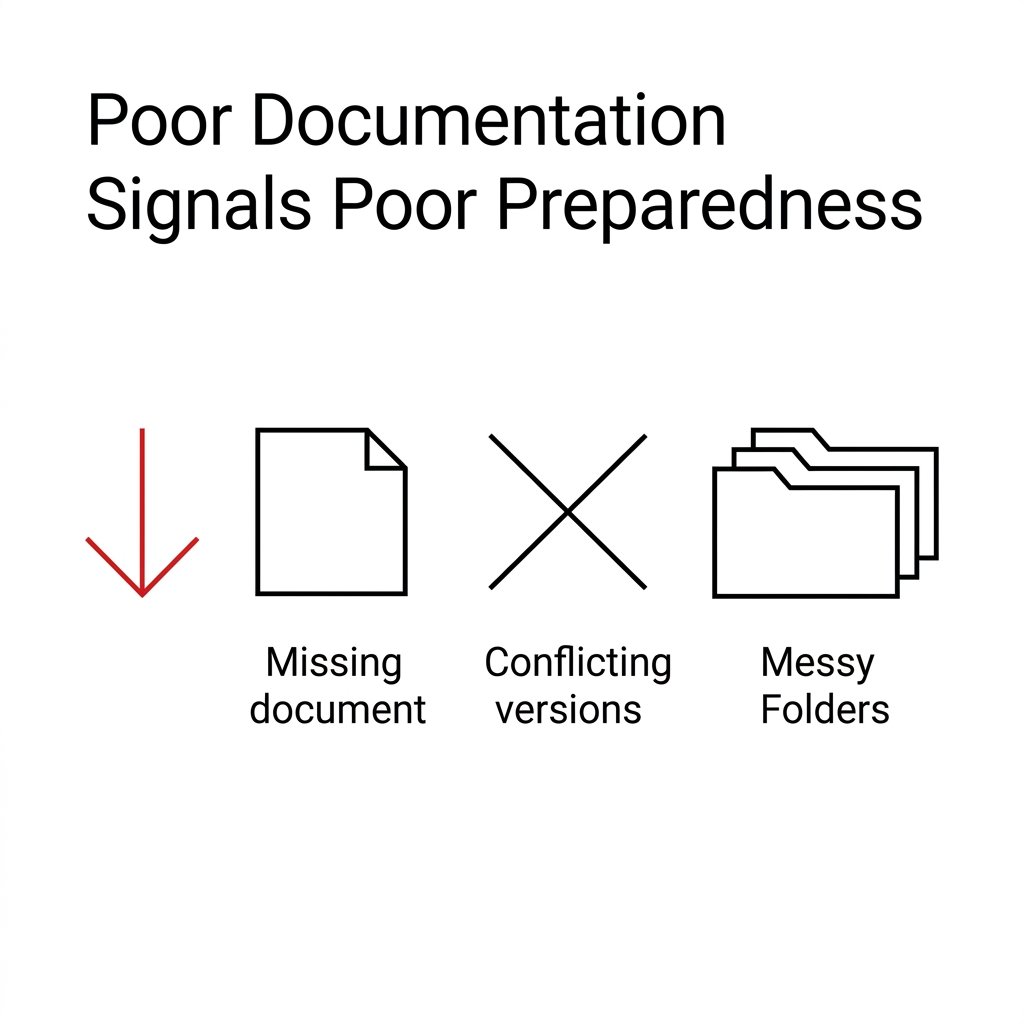
- Multiple versions of the same document
- Files with unclear or inconsistent names
- Important documents buried several levels deep
- Missing supporting documents
- Expired or superseded documents mixed with current versions
- Financial assumptions that cannot easily be traced to supporting evidence
- Contracts referenced in one document but absent from the data room
- Different documents presenting inconsistent figures, dates, ownership information, or project assumptions
- Sensitive information placed where it can be accessed unnecessarily
- Documents uploaded without enough context for the reviewer to understand their relevance
The underlying problem is not simply organization. It is review friction.
How Lenders Look at a Data Room
A lender reviewing a data room is trying to answer specific questions about the transaction.
For example:
- What exactly is being financed?
- Who owns and controls the project?
- What contracts support the project’s revenues and costs?
- What permits and approvals are required?
- What are the construction and operating risks?
- What assumptions support the financial model?
- What evidence supports those assumptions?
- What happens if costs increase or revenues decline?
- What assets, rights, contracts, or cash flows support the financing?
- Can the relevant obligations and security arrangements be legally enforced?
Project-finance guidance from the World Bank describes lender analysis around areas such as the sponsor, project economics, risk allocation and mitigation, and other project parties. It also notes that lenders assess whether project cash flows are sufficient to cover operating costs, taxes, and debt service, including with a margin for downside conditions.
The data room supports that process by allowing the lender and its advisers to verify the information behind those questions.
That means the quality of the information path matters.
A strong statement supported by an easily identifiable underlying document is different from a statement that requires the reviewer to search through dozens of unrelated files to establish whether it is correct.
The Most Common Data Room Mistakes
1. Treating the Data Room as a Storage Folder
A conventional company file repository is designed primarily for internal storage.
A financing data room has a different purpose: it needs to allow an external professional reviewer to understand and verify a transaction efficiently.
Simply uploading everything the sponsor has accumulated does not accomplish that.
2. Uploading Everything Without Establishing What Is Current
More documents do not automatically make a financing submission stronger.
If old contracts, draft agreements, superseded financial models, and current documents are mixed together, the reviewer has to determine which version governs.
That creates unnecessary uncertainty.
3. Failing to Connect Claims to Evidence
A project may describe a customer contract, permit, construction agreement, projected revenue stream, ownership structure, or technical assumption in one document.
If the underlying evidence cannot be readily located, the reviewer has to investigate the connection independently.
The issue is not that while not every statement requires a separate explanation, the material claims need to be verifiable.
4. Ignoring Inconsistencies
Small inconsistencies can become disproportionately important during diligence.
A project description may state one capacity while a technical document states another. A financial model may use a different project cost from the budget. A corporate document may show different ownership information from the financing materials.
Each inconsistency creates another question.
One inconsistency may be easily resolved. A pattern of inconsistencies can make the reviewer question whether the underlying information has been adequately controlled.
5. Assuming a Large Data Room Looks Comprehensive
A data room containing thousands of files can still be incomplete.
Volume does not demonstrate readiness.
The relevant question is whether the information required to understand, verify, and diligence the project is present, current, coherent, and accessible.
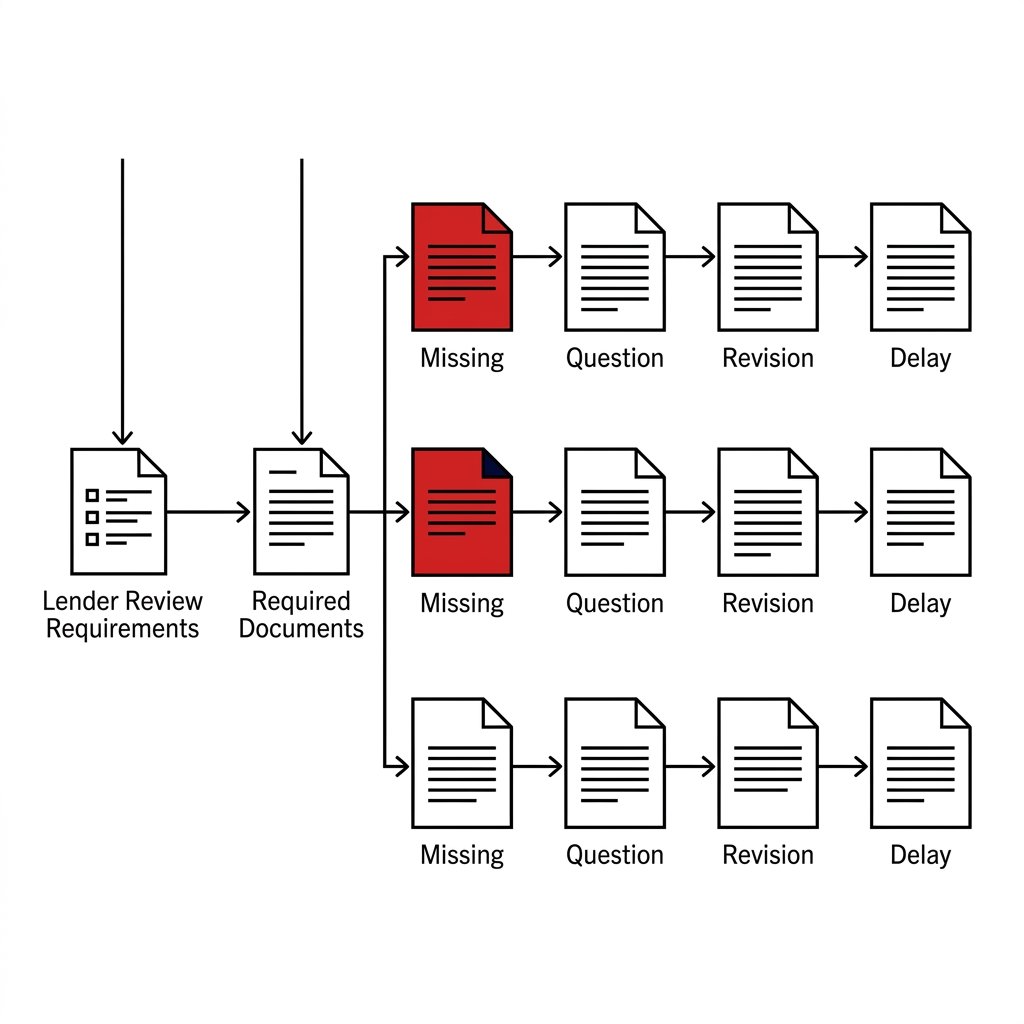
What Happens When the Data Room Is Difficult to Review?
The consequences are usually practical rather than dramatic.
A reviewer may request additional information. The diligence process may take longer. More people may become involved. Questions may move back and forth between the lender, sponsor, lawyers, technical advisers, and other consultants.
That increases transaction friction.
It can also affect how the project is perceived within the financing process. A lender cannot simply assume that an unsupported statement is correct because the project itself appears attractive. Material assumptions need evidence, and material risks need to be understood.
This is particularly important in project finance because lenders are analyzing the project’s ability to generate the cash flow required to support the financing. Financial analysis is supported by extensive due diligence, and lenders may test the project’s economics under different assumptions and downside scenarios.
A messy data room does not automatically mean a lender will reject a project. But it can make the lender’s work harder, slower, and less efficient—and that can matter when a financing process involves multiple projects, advisers, lenders, or competing priorities.
How to Prevent Data-Room Problems
The fundamental principle is simple:
Build the data room for the person who has to review the project, not for the person who already knows the project.
That means the information should be:
- Current — reviewers should be able to identify the operative versions.
- Consistent — important facts should not change from document to document without explanation.
- Traceable — material statements and assumptions should be capable of being supported by underlying evidence.
- Logical — information should be organized so an unfamiliar reviewer can navigate it.
- Controlled — access and document versions should be managed appropriately.
- Complete enough for the stage of financing — important gaps should be identified rather than hidden beneath a large volume of files.
- Review-oriented — the structure should help a lender move from understanding the project to verifying its key claims and assessing its risks.
A good data room is therefore not simply a clean collection of documents. It is an information environment that reduces unnecessary work for the people conducting diligence.
The Bottom Line
A messy data room rarely destroys a financing opportunity through one badly named file. The greater risk is cumulative.
Missing evidence creates questions.
Unclear versions create uncertainty.
Inconsistent information creates additional diligence.
Poor organization creates wasted review time.
Repeated requests create delays.
Delays create friction around the financing process.
The objective is to make the project clear enough to understand, organized to navigate, and supported to verify.
That is what turns a collection of project documents into a lender-facing data room.
How to Build a Review-Ready Project Data Room
If you are preparing a project for financing and want a structured implementation framework for building and organizing the data room, see AltFin VDR Blueprint How to Build a Virtual Data Room That Gets Your Project Reviewed.
It is designed for project sponsors and developers who need to prepare a lender-facing VDR around the requirements of lender review.
