
Feasibility Study Format
A feasibility study format is the structure used to present the evidence needed to determine whether a proposed project is technically, commercially, financially, legally, and operationally feasible. A useful format does not simply organize information into chapters — it connects the project’s assumptions, technical solution, market or revenue case, costs, financing requirements, risks, and conclusions so the lender can assess whether the project is viable.
For projects seeking external capital, the feasibility study must also make its assumptions and evidence clear enough for a lender reviewer to examine them. The exact format varies by project type, but a lender-oriented feasibility study generally covers five core areas.
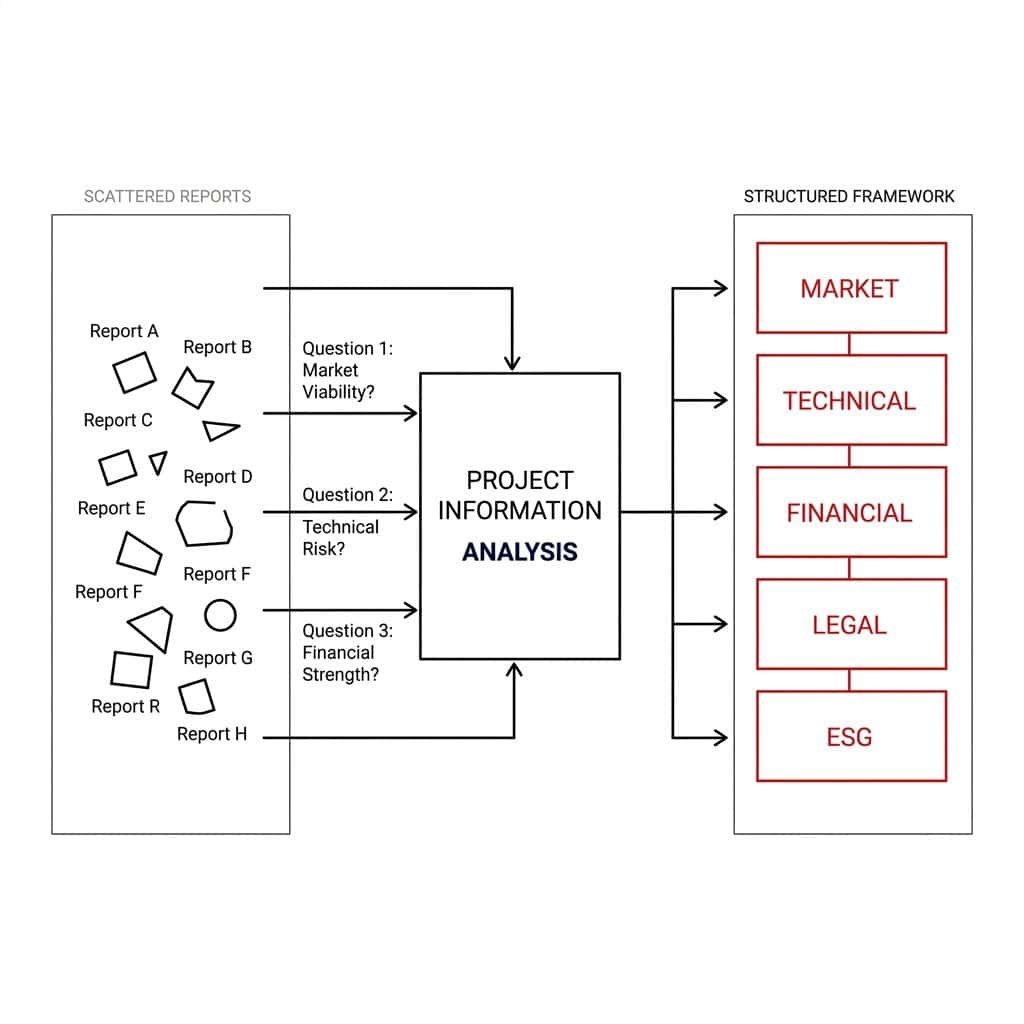
The five core sections
1. Executive summary
The decision-level view of the study: what the project is, what it requires, the principal findings, and the key conclusions. It should reflect the evidence in the underlying sections, not introduce new conclusions.
2. Technical feasibility study
Whether the project can be developed, constructed, operated, and maintained as described. Covers the site, technical configuration, capacity, construction requirements, schedule, and operating needs.
3. Market and commercial feasibility
Whether there is a credible market, customer or offtake structure, pricing basis, and commercial rationale. The key distinction is between stated commercial assumptions and the evidence supporting them — a revenue forecast alone does not establish commercial feasibility.
4. Financial feasibility study
Whether the project’s economics support the required capital investment and operating model. Translates the technical and commercial assumptions into capital costs, operating costs, revenues, funding requirements, cash flows, and debt-service capacity.
5. Legal, regulatory, risk and ESG considerations
Whether the project can legally and practically proceed. Covers permits and approvals, land or site rights, material contracts, regulatory requirements, environmental and social matters, and the material risks that could affect development, operations, revenues, costs, or repayment.
These sections are not independent. Information in one must support and remain consistent with the others.
Why format matters
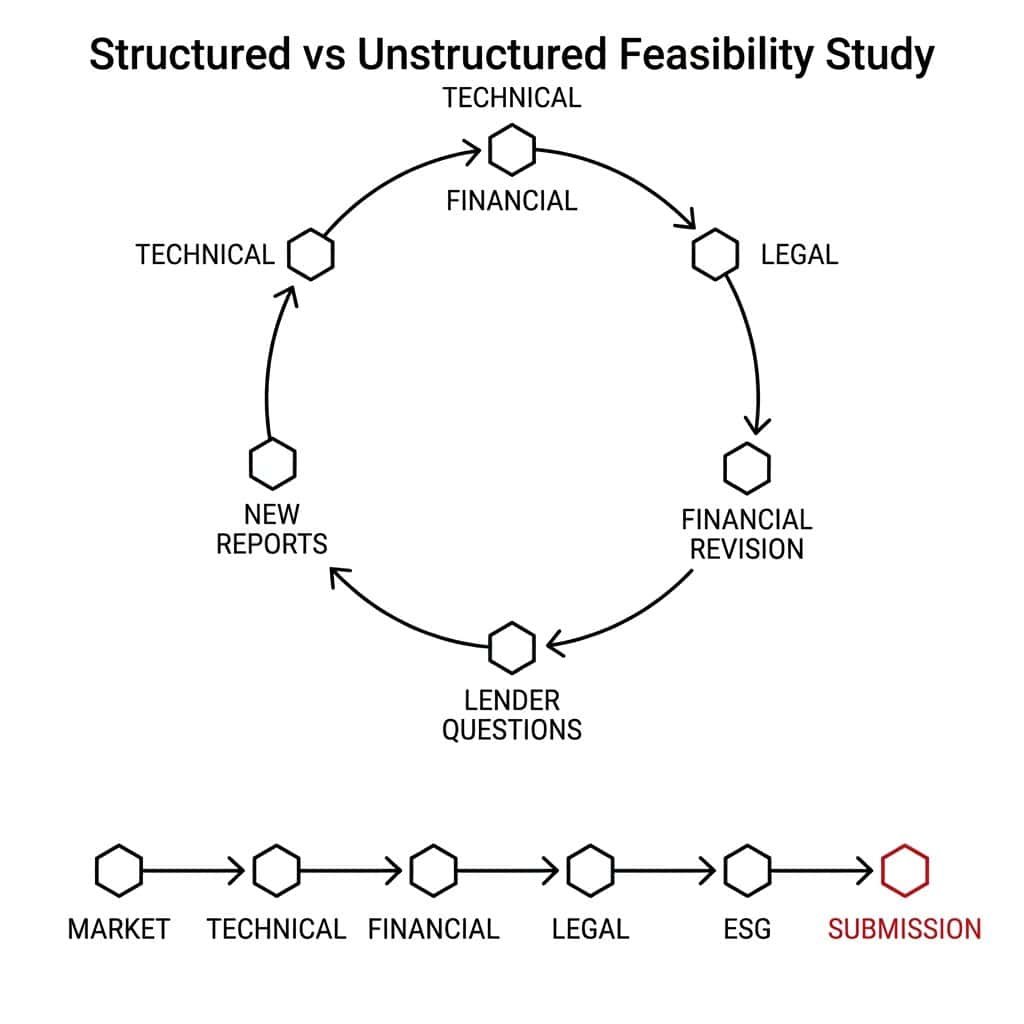
A feasibility study can contain substantial information and still be difficult to evaluate if that information is disconnected or internally inconsistent. The technical section may assume one capacity while the financial model uses another. A construction schedule may imply one capital expenditure profile while the funding assumptions imply another.
Format is therefore more than presentation. The structure determines how the evidence can be understood and cross-checked — particularly when an external reviewer is assessing whether the project’s assumptions can be independently examined.
Format vs. feasibility study template
The terms feasibility study format and feasibility study template are often used interchangeably, but there is a useful distinction. A format describes the structure and required content of the study. A template provides a practical starting point for producing the document within that structure.
If you are looking for a template, the important question is not simply “What headings should I use?” but “What information needs to be established and supported under each part of the study?”
Next step
Knowing the format is the first step. Producing a feasibility study that lenders will actually rely on requires the project team to develop, substantiate, reconcile, and document the information that belongs within that structure.
→ How to Produce a Feasibility Study That Lenders Will Not Ignore
