
How to Write an Investment Memorandum
An investment memorandum explains an investment opportunity, transaction, or project so a lender, credit reviewer, investor, or other capital provider can evaluate its commercial case, financial structure, risks, and supporting evidence. To write one, organize the relevant information into a clear, consistent document tailored to the transaction and its intended audience
An investment memorandum (IM) is a structured document that explains an investment opportunity so that a prospective investor, lender, or other capital provider can evaluate the project, its financial case, risks, structure, and supporting evidence. To write one effectively, organize the information into a logical sequence that allows the reader to understand what the project is, how it will generate returns or repay capital, what supports those assumptions, and what risks need to be considered.
The exact format varies by transaction and audience. An investment memor prepared for a project seeking debt financing, for example, needs to communicate information relevant to credit review rather than simply present the project as an attractive investment.
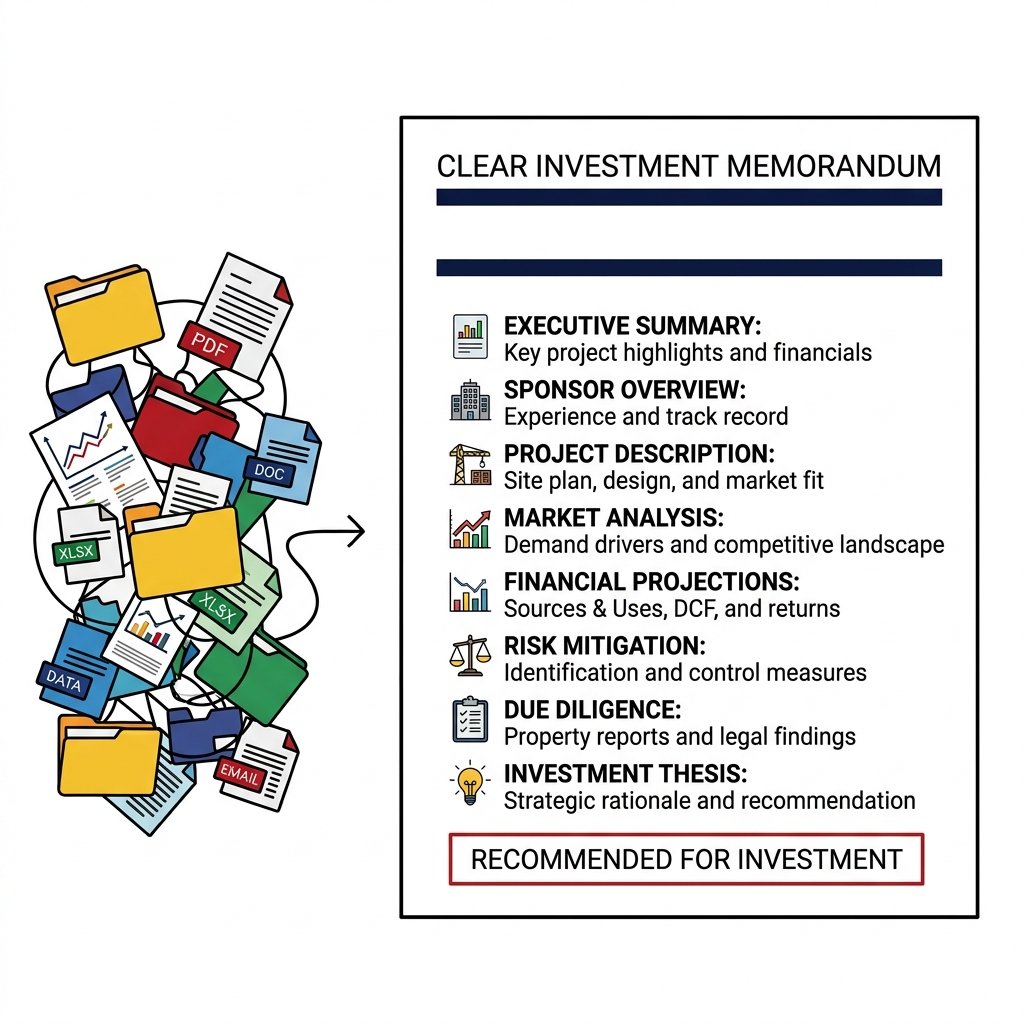
What an Investment Memorandum Should Contain
A typical investment memo brings together the principal information needed to evaluate a transaction. The major components generally include:
1. Executive Summary
The opening section gives the reader a concise understanding of the opportunity, including the project, proposed transaction, capital requirement, intended use of funds, and key financial characteristics.
It should allow the lender, credit reviewer, or other capital provider to understand the transaction before reviewing the supporting detail.
The IM should present a clear, consistent account of the transaction that allows the intended capital provider to understand its economics, structure, and principal risks.”
2. Project and Sponsor Overview
This section explains what is being financed and who is responsible for developing, owning, or operating it.
Depending on the transaction, this may include the project’s development status, ownership structure, relevant experience, counterparties, and other information needed to establish context.
3. Market and Commercial Case
The IM should explain the market in which the project operates and the commercial arrangements supporting its revenues or demand.
The purpose is not simply to describe the market, but to establish the commercial basis underlying the project’s financial assumptions.
4. Technical and Development Information
The document should provide sufficient information to explain the project’s physical scope, development status, technology or operating model, and material technical considerations.
Supporting technical studies and other underlying documentation should be referenced where appropriate.
5. Financial Case
The financial section explains the project’s economics and the assumptions underlying its projected performance.
Depending on the transaction, this can include capital costs, operating costs, revenues, cash flows, financing assumptions, returns, and relevant financial metrics.
The financial information should be consistent with the underlying model and supporting project documentation.
6. Financing and Transaction Structure
The investment memorandum should explain how the proposed transaction is intended to be financed.
This includes the amount and type of capital being sought, the proposed capital structure, the intended use of funds, and the principal terms or structural features relevant to the transaction.
7. Risks and Mitigants
Material project, commercial, financial, technical, regulatory, and other risks should be identified rather than omitted.
Where appropriate, the IM should also explain the contractual, structural, financial, or other measures that address those risks.
8. Supporting Information
The memorandum should be supported by the underlying documentation on which its statements and assumptions rely.
This creates a connection between the information presented in the memorandum and the evidence available for further review.
What Makes an Investment Memorandum Effective?
An effective investment memorandum is clear, internally consistent, evidence-supported, and appropriate to its intended audience.
The information presented in the narrative, financial model, supporting studies, contracts, and other transaction documents should not contradict one another. Material assumptions should be supportable, and the document should make it possible for the reader to understand both the investment case and the principal risks.
For a project seeking financing, the memorandum should ultimately help the relevant capital provider understand the transaction, its financial structure, underlying assets or cash flows, and principal risks, not merely explain why the project is commercially attractive.
Investment memoranda can be used across project finance, structured finance, infrastructure and development finance, asset-based lending, acquisitions, and other capital transactions, with the appropriate emphasis depending on the transaction.
Summary
To write an investment memorandum, define the transaction and intended audience first, then organize the document around the project, sponsor, commercial case, technical basis, financial case, financing structure, risks, and supporting evidence.
If you need to actually produce an investment memo for credit review, the AltFin Investment Memorandum Blueprint provides a structured framework for transactions involving project finance, structured finance, infrastructure finance, development finance, asset-based lending, acquisitions, and non-recourse and limited-recourse transactions.
See How to Write an Investment Memorandum That Answers Credit Questions.
